Stuck in the Doldrums

All in a hot and copper sky,
The bloody Sun, at noon,
Right up above the mast did stand,
No bigger than the Moon.

Day after day, day after day,
We stuck, no breath no motion;
As idle as a painted ship
Upon a painted ocean.

Samuel Taylor Coleridge from Rhyme of the Ancient Mariner


So what happens when you are stuck in the proverbial doldrums?  Just like I feel this day, as many a day.  No wind about to allow the moments of stuckness to move from one to the next – work, relational, self – tiring of all the internal gyrations and contortions that try and have it be any other way than how it is.  No forcing of a wind to blow through the doldrums.

The doldrums, though, are not always becalmed.  At times they are visited by great, tumultuous storms, which can whip up at a moments notice.  I remember sailing through such a storm the year we sailed with friends around the Whitsunday Islands.  Setting off in beautiful clear weather, four couples on a 40-foot, four berth, sailboat.  Our friend insistent he could sail and had a captain’s license, my husband with experience of sailing small lasers, as backup.  Having passed the brief skipper’s test on the initially calm waters, we set off across the straight to the islands.  Traversing the islands on the south side we suddenly ran into a massive storm.  Whipping up the seas, pushing the waves over the sides of the boat, and tossing us about.  Most of us, land lubbers all, instantly succumbed to seasickness, including our intrepid skipper.  My husband took over, and having no one else to boss about I was it.  “Fetch” the life jackets in the hull.  Everybody safe.  “Crawl” to the front of the boat to deal with all the sheets (ropes), the cleats (locking clamps for the sheets), “pull” here, “strap” there, “unhook” the sheet that got caught so the jib (smaller mobile sail) could swing across.  With not a clue about sailing, I could, however, perform under pressure, and was grateful for a childhood of climbing trees, scrabbling through drain pipes, and sliding down gravel hills.  The fear of water, falling overboard, drowning, relegated to the background behind what needed to be done.  Eventually we worked our way around the southern face of the island and into some protection on the eastern side.  The stormy weather was not repeated but I learnt much about letting go of fear, making sure I didn’t slip in the wet, and just doing what was needed.  Of appreciating the calm once the wind died down.  But the doldrums, becalmed, demand a different kind of presence.

Many things are awaited in the doldrums.  We at times wait for a child to die.  Knowing that death’s door will usher in many other unwanted gifts – relief, grief, loss, confusion, pain, and more waiting for life’s raw intimate touch to lessen somewhat.  We wait for a father to accept his child as his own, for melanin over time to darken the skin to assure him and his family that it is indeed so.  We wait for a meningitis to settle, to see how badly the brain has been affected, for an awakening that may never come.  We wait for a last breath of a baby expected not to survive at birth, confounding all expectations, despite a barely present brain.  We wait for anxiety to settle around taking a severely affected baby home, for a getting used to a new normal of sorts.  We wait for acceptance, for loss, for grief, for relief, for rest.  We realise eventually these doldrums are the calm within the eye of storm, that the relief of getting out of the wind is a momentary breathing space, to gather our spirits for the journey ahead, for gathering of energy to endure more moments of storms and winds to come, that the waiting and gathering is a part of every moment of every day.

In the waiting we may come to realise that the one thing we need not wait for is love, or the unfolding of this life, that in each moment, love and life, is present, if at times unrecognised. That love is offered by our nearest, and by those we may only momentarily pass by during our day.  That love is offered in every glance of acknowledgment by another human being.  That our day is filled with love, and with life, and all we need do is tap into its well.  As ever present as the more easily recognised well of grief, or even the waiting space of the doldrums.   So while we wait in these doldrums for the breeze to blow, with hope and faith that we can weather the storm that is to come, may we all know that we are love, we have life, and are loved.

For the Raindrop

Ghalib


For the raindrop, joy is in entering the river –

Unbearable pain becomes its own cure.


Travel far enough into sorrow, tears turn to sighing;

In this way we learn how water can die into air.


When, after heavy rain, the storm clouds disperse,

Is it not that they’ve wept themselves clear to the end?


If you want to know the miracle, how wind can polish a mirror,

Look: the shining glass grows green in spring.


It’s the rose’s unfolding, Ghalib, that creates the desire to see –

In every color and circumstance, may the eyes be open for what comes.

Translated by Jane Hirshfield
Posted in Love & loss, grief & joy | Tagged , , , , , , , , | Leave a comment

Paying attention to the heart

“I also have one of those organs!” she said, hand over her heart, clasping with all her strength,  “A real heart!”  Eyes wide with wonder and surprise.  I had been leading a short session last week with some care workers.  Leading us all through a brief body scan.  Spending quite some time noticing the external sensations of the body, then sinking under the skin into the body, and lastly settling into the space of the heart itself.  Noticing the beating of the heart.  Noticing the resting of the heart. This organ, the most wise of the body, with capacity to rest every moment even as it beats.  From the very first spark that starts the heart beating at about 5 or 6 weeks (how the developing myocardial fibers co-ordinate their contractility to spark the heart beat is still mystical to me) to the moment that it stops at death, the heart continues to beat unabated.  Not without rest or pause though.  The heart pauses every moment.  After every beat.  It knows to rest with regularity.  To contract and to relax, each and every time.  Imagine the heart did not rest after every beat.  Well we know what happens then, it goes into either atrial fibrillation or ventricular tachycardia, something that is not life sustaining.  How wise this heart of ours.  That it is made to beat and to rest every moment, even as it carries us throughout this lifetime of ours.

So imagine too the wonder when one finally is directed to noticing this wise heart of ours.  To pay it some attention.  To settling underneath the level of our brain and head space engagement with life.  Even health care workers, who deal with ill and dying patients each day, with physically tangible organ failures, are prone, as all of us, to being disconnected from an awareness of the body.  How precious this gift that allows one to engage with the realisation that we too have these organs, that we too have bodies that accompany us throughout each day; that we are not just heads full of thoughts moving through the day, much as we may live like we are; that we can pay attention to how this body functions, to engaging with it every moment of this day.  And perhaps in the noticing and paying attention, we can settle the mind space and the mindless racing around, and attend to the sensations and emotions underneath the thinking space that we often suppress and ignore.  Engaging with the heart, the core, of our lives, remembering this space anew, or for the first time.

In some ways the heart is like music.  To enjoy music one must appreciate the pauses.  Without them there would just be noise. The pauses and rests are as important as the notes themselves.  Just as we pause in speaking, to give emphasis, to give our speaking character and allow the other to hear the speaking, music needs pauses to allow the beauty of the music to come through. I once had a roommate at college who spoke so quickly that it was almost impossible to understand what she was saying. Granted this was most probably due to the fact that her brain worked at that tempo too.  It took me some time to get used to her cadence but our other roommates did not adapt as well and I found myself often repeating what she had said.  Almost like an echo pause.  Validating the need to build in some rest space for the words, the music, the beating, to be engaged with and to be appreciated.

Paying attention to this heart of ours enables us to pay attention to the heart of our work, of our relationships, of our lives, of ourselves.  It perhaps allows us to realise that we are so much more than this often narrow engagement we have with our every day adventure.  The discovery of a heart demands that we engage from the heart, not just from the brain.  Be more courageous in our every day and not turn away from the difficult, from expressing our deepest heart’s self.  Even as paying attention to the heart may demand we speak difficult truths that are not easy to express or to be heard.

David Whyte puts this across eloquently in his book Crossing the Unknown Sea, work as a pilgrimage of identity –  “One of the distinguishing features of any courageous human being is the ability to remain unutterable themselves in the midst of conforming pressures.  The surprising realization is that our friends can try to make us conform as much as our worst enemies.  The excuses to fall away, to lose courage, to be other than ourselves are ever present and incredibly intimate.  There seems to be no profession exempt from these warping forces, whether we are dry-walling or day trading or doctoring.”

So this day, pay attention to your heart.  Notice how it beats, how it pauses.  How it perhaps is holding some truth that is yet to be expressed.  Give it enough space to be discovered.  You may be surprised, or riveted with wonder.

My life is not this steeply sloping hour

in which you see me hurrying.

Much stands behind me; I stand before it like a tree;

I am only one of the many mouths,

and at that, the one that will be still the soonest.


I am the rest between two notes,

which are somehow always in discord

because Death’s note wants to climb over –

but in the dark interval, reconciled,

they stay there trembling,


And the song goes on beautiful.


by Rainer Maria Rilke

Posted in Caring for the Carers | Tagged , , , , , , , | Leave a comment

More about swimming with sharks

Sitting here, at the back of the near empty class room, most of the afternoon, working on my computer, reading the paper…just sitting.  Being a needed presence to my daughter writing thus far the most difficult two exams.  Not really being of much help to the distress that has been present all day about not being well, not being prepared enough, being tired from the already intense week of exams, from the fatigue and pain of the week of sitting, studying, writing, demands beyond the real capacity of a frail body and mind.  Knowing, however, the power of presence, and experiencing its value anew through the act of my just simply being here.  Giving up everything else for just this being present.  How powerful this simple presence can be.  Knowing the importance of staying present as the strong undertow and current washes past one. (..see my last post)

I am struck again today by how we cannot exist without a holding container of love and support.  How many of us falter on the road without community, family, without a necessary felt sense of being loved.  My own mother, after WW2 ended, returned to high school and struggled to regain the level she was at before.  Before the war she was a top achiever.  The war, with its German occupation of Alsace dictated that all schooling be done in German, interrupted much of her high schooling.  Then when school recommenced it was changed back overnight again to French.  My mother found herself not the top achiever anymore.  Few at home seemed to care whether she finished her schooling or not.  Getting the family industry with the vineyards and wine making back on track was a greater priority.  No one really noticed when she no longer went back to school.  For me this really meant her own mother did not really notice, the sadness and pain of this momentary neglect, however, unintentional, or unaware.  Her parents, caught up a bitter relationship struggle and eventual divorce.  She started working in the home and the vineyards everyday.  There was enough work to be done, but little by little that dynamic also changed.  Her brother got married.  The balance of power shifted.  Her brother became the dominant male in the family.  There were too many women around and my mother found herself with a small packed suitcase at the train station one day on her way to work in a home in Zurich.  A lovely elderly couple she worked for but the dreams she had for herself as a young girl were not those of being housekeeper.  Eventually she moved back closer to home and worked as assistant to a psychiatrist.  A female psychiatrist.  And through the telling of stories from this time my own dreams as a young girl started.  Dreams that girls could be more than wives, mothers, and assistants.  They could be professionals too.  In fact as I got older I understood they could be anything they wanted to be.  Perhaps today these may seem like self evident dreams to girls and women that grow up in modern developed countries, in cities, with examples aplenty.  But still, everyday, in my work life, I see the power of example, of mentorship, of modeling strength and courage to young girls struggling to dream that their lives can be better, can be more than dominated by poverty, patriarchy, struggle, and pain.

In the unfolding of my dreams I have also come to learn how they can be constrained.  How the constant drag and pull of the currents and pressure of life pushes one in a certain direction at times.  How unconsciously we often live our lives.  I certainly did for many years.  It has taken me many more to wake up.  To understand the moment to moment choices of each day.  To meet the moments as they arise and be present.  And in this meeting I understand too that my total presence and commitment to this moment is what is needed.  That I need to show up in a way that I haven’t always.  That I need to choose to be here.  That choice means that some things, such as at times the needs of our children, take precedence over any other needs, whether they be personal or work related.  Many months ago I had thought this year would be easier.  But life’s meandering path had other plans for my life and it proceeded to uncover a year of love, joy, suffering, and difficulty, that even I could not have conceived of in my wildest dream.  So here I stand this day, as every.  Showing up, being present, paying attention to what is calling to the heart of this moment.

My apologies for the meandering nature of my posts this week.  They only reflect the nature of my day, my heart, and my life.  May you meander through yours with an openness to whatever may show up that has heart and meaning and give you joy, even amidst the presence of difficulty and pain.

I have had two themes this year that have followed me through every moment.

The first one comes lately out of meeting many strong women who seem to have understood before me (granted they are somewhat older and wiser than me) that life is tough, and needs to taken on with some humour and rebellion.  Although the rebellion bit I have always had a handle on! So the first mantra of us older women is..

“Just f—k it!!”

Apologies if you are shocked.  If you don’t get this, don’t worry, your time will come! Mine did.

The second theme for me is by Angeles Arrien and is as constant as the afternoon thunderstorms at the moment and has helped me navigate the currents of this year so far.

Show up and choose to be present

Pay attention to what has heart and meaning

Tell the truth without blame or judgment

Be open to, not attached, to all outcome

Enjoy the attached.  May it bring a smile to you this day.

The Cookie Thief

A woman was waiting at an airport one night,

With several long hours before her flight.

She hunted for a book in the airport shops,

Bought a bag of cookies and found a place to drop.

She was engrossed in her book but happened to see,

That the man sitting beside her, as bold as could be.

Grabbed a cookie or two from the bag in between,

Which she tried to ignore to avoid a scene.

So she munched the cookies and watched the clock,

As the gutsy cookie thief diminished her stock.

She was getting more irritated as the minutes ticked by,

Thinking, “If I wasn’t so nice, I would blacken his eye.”

With each cookie she took, he took one too,

When only one was left, she wondered what he would do.

With a smile on his face, and a nervous laugh,

He took the last cookie and broke it in half.

He offered her half, as he ate the other,

She snatched it from him and thought…oooh, brother.

This guy has some nerve and he’s also rude,

Why he didn’t even show any gratitude!

She had never known when she had been so galled,

And signed with relief when her flight was called.

She gathered her belongings and headed to the gate,

Refusing to look back at that thieving ingrate.

She boarded the plane, and sank in her seat,

Then sought her book, which was almost complete.

As she reached in her baggage, she gasped with surprise,

There was her bag of cookies, in front of her eyes.

If mine are here, she moaned with despair,

The others were his, and he tried to share.

Too late to apologize, she realized with grief,

That she was the rude one, the ingrate, the thief.

by Valerie Cox

Posted in Life, stories & more | Tagged , , , , , , , , | 2 Comments

Swimming with sharks

This past week has felt somewhat like my last diving experience 20 years ago.  My husband and I had learnt how to dive during our time down under while living in Australia.  We took lessons, did our requisite deep dives in the cold waters of Sydney harbor, and then had some absolutely stunning dives on the Barrier Reef.  The best being a weeklong sailing trip with friends around the Whitsunday Islands.  We had our dive tanks on board and would hop into the water where we wished, swimming with the manta rays and parrotfish.  Our last dive in Australia, though, was quite a different experience.  A weekend getaway at Byron Bay, not the best weather, but we were determined to dive.  This was going to be our first shark encounter, perhaps.  In an area well known for sightings of Grey Nurse sharks. Just off the coast near some small rocky islands.  The weather quite blustery, coming in fast, but the dive master assured us we could still dive.  Admittedly I was anxious.  Very anxious.  Meeting a shark under the water was not quite my idea of fun.  I had been happy to stick to the colourful coral and gentle fish, but then I was assured it would be safe, and fine.  Well fine I was, for sure…! (you know what fine stands for, don’t you…? F_cked up, insecure, neurotic, emotional…yes, that one!) ….but I went along none the less.  Under water the strength of the current was incredible strong.  Pulling us very steadily toward the undersea cave where the shark had been seen in earlier that day.  I was hanging back, not feeling very brave.  Hanging on to the rocks at the top of the cave for dear life, watching my husband and the dive master swim on ahead.  No shark in sight for me.  They swore that they did see one.  Eventually allowing the current to draw me down into the opening of the cave and out the other side.  No lurking shadows anywhere.  The swim back to the meeting point the most difficult part still.  The current becoming stronger by the minute.  It was almost like clawing myself back.  I would have to wait for the swell to push me a few meters forward and then hang onto the rocky outcrops on the sea bed with all my strength, fingers straining, while the backwash threatened to pull me further backward still.  This process, excruciatingly slow, seemed to go on for ever.  Always the anxious over breather underwater, I soon enough had to give the buddy sign that my air was running out (the international “had enough” sign) and signal that I needed to surface.  Well my buddy, husband, complied, even though he had more than enough air still in his tank.  We came up too close still to the rocks, and far away from the boat, having to swim another 100meters through the choppy water before we could get out of the water and back on board.  All the while I was not completely sure if there was really a shark or not, and all my energy had been used up with fighting the current.  Well a week later a shark certainly was around.  A great white to be exact.  Exactly at the spot where we had been.  Taking a honeymooner stopping on ascent alongside the anchor chain.  My enduring memory of that day was of fear, anxiety, holding back, trying to not be swept into the cave with a possible shark in it, as well as regret at not having glimpsed the shark after all.  At not having truly tested my fear.  The memory staying with me of clawing my way back,  hanging on and waiting while the current washed past, and then using the forward motion to gain a new handhold.  Slowly and steadily as best I could working my way along.

So this week the memory of hanging on, while being buffeted by strong currents, has been re-evoked in me. Hanging on, hanging in, with all my strength.  Waiting for the current to wash over me while I wait, sit, stay, be, and show up for every day as best I can.  Weathering the daily storms of illness, emotions, exams, school, anxiety, work, and just meeting the storm of life as it shows up.

I had meant to write a completely different post today.  But maybe it’s still all the same posting.  One about motherhood, the nature of women, mentor ship, and how important the education of a mother is to the success of her children.  Something born out time and again by research showing that the best way to improve the lot of a nation’s children is to ensure the mothers are educated.  Our own census 2011 was published this last week showing how poorly we are doing in this regard.  Particularly with our girls.  So here I am ensuring every day my own children are well educated.  They will tell you it’s been a stressful journey and that the expectations at times have been too high.  Ours, as well as their own.  For me I know that my own mother was top of her class, but due to the interruptions of World War 2 and little family support of her education she dropped out in her last year of school, no longer top of her class when school resumed after the war, and feeling “low morale” as she would have said.  I also know that her own mother did not finish high school, also having been top of her class, quite an achievement for a young girl close to 100 years ago, even if it was only a small rural French village.  But she was pregnant as a 17 year old and also did not finish school.  Was married off instead.  So as a rare event, in my maternal lineage, of a daughter to finish high school, let alone go to university, forgive me for feeling strongly about educating women. Feel strongly about following our dreams and how we often don’t…, but that will be the topic for another day.

Till then

At least women voted this week

At least our voices matter these days

Make them count

Swim more with sharks and meet the fear

Don’t be sidetracked by the imaginary sharks

More often it’s the current and backwash that demands our attention each and every day

This demands more daily courage than the occasional shark sighting

Posted in Life, stories & more | Tagged , , , , , | Leave a comment

Life without calculation

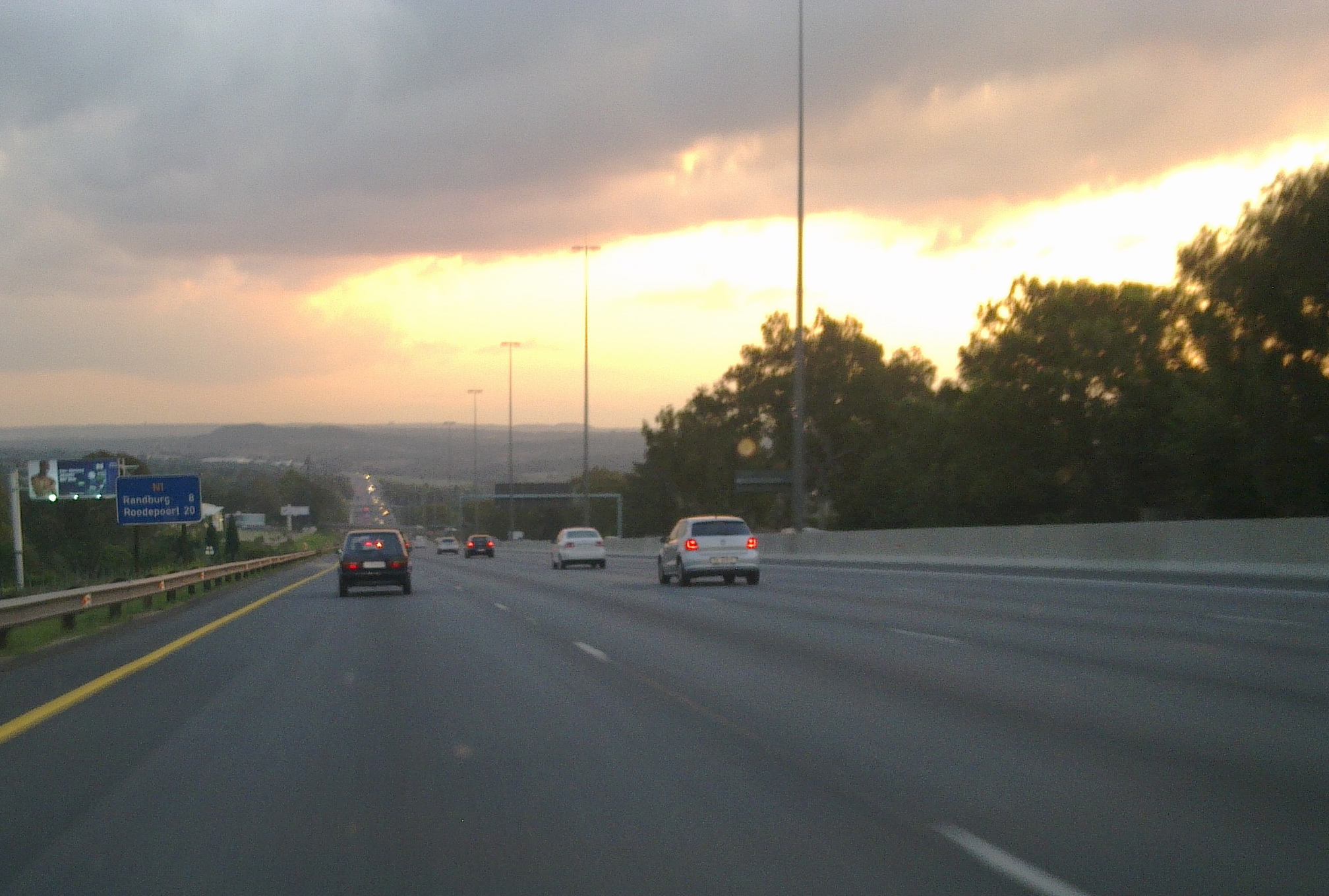
Driving on the highway last night to visit a little patient and his family I see weekly, I found myself musing about the nature of faith and hope.  I rarely travel this road but it has become a weekly ritual now for quite a few months.  Despite my intentions and planning it always seems to be around evening time and into the setting sun, and inexplicable has evolved into some of the more peaceful moments of my week.  Despite Jo’burgers thinking at times we live in a flat city the rolling hills are aplenty.  Coming up over the ridge from my usual haunt, being offered the vista of the setting sun over the distant Magaliesburg, settles my week back into perspective.  It does not hurt that the open evening highway allows the usual stop start driving of the week to stretch the legs on the turbo, the cool spring evening welcome after an afternoon shower, allowing the settling of a frazzled week of being present to suffering, at work and at home.  The home I visit, despite facing multiple heart wrenching losses, one of peace, joy, and laughter.  I often come away wondering who gets more benefit from these visits?  An example of holding faith and hope constantly present in our hearts while looking the reality of the moment squarely in the eye and trusting that all will be well, no matter how it unfolds, even as reality becomes more painful to bear.

Many discussions this week have been around letting go of the clinging to life at all cost, recognising the immense suffering that may be caused by the clinging.  One such discussion being with a family and young teenager of 15, deciding not to go any further, to take the last months of quality rather than disfiguring surgery and debilitating chemotherapy, and to face the journey with love, courage and dignity.  Leaving me with immense respect for parents and children who navigate the road of saying no to futile treatment yet retain hope and faith and dignity within themselves and their families.  The more I do this work, however, the more I understand and have compassion for the difficulties of sitting with the choices, with the challenges, and have less delusions about the nature of denial and futile hope.  We all travel this road as best we can and none can say how another should navigate it, even if this may seem a less skillful way of engaging with what may seem obvious to others.  We perhaps witness more commonly that hope is defined superficially in the hoping for all that is difficult and terrible to be taken away from us, but the true healing depth of hope and faith is in the capacity to be with all that is difficult and terrible and still retain joy, love, and laughter in the daily encounter.  This hope and faith allows a deep trust in wherever it is we place our trust, be it a God, a being, or just simply life, to hold us and to keep us well and safe, a wellness and safety that transcends this momentary existence with a capacity to meet all suffering in a way that transforms it into a journey of simplicity that can be embarked on and fully met.

Ira Byock, Director of Palliative Medicine at Dartmouth-Hitchcock Medical Center in Lebanon, New Hampshire, stated it wisely:  “When someone we love is diagnosed with a life-threatening condition, the worst thing we can imagine is that he or she might die. The sobering fact is that there are worse things than having someone you love die. Most basic, there is having the person you love die badly, suffering as he or she dies. Worse still is realizing later on that much of his or her suffering was unnecessary. “

…and then there is this…

Life by Juan Ramon Jimenez


What I used to regard as a glory shut in my face,

was a door, opening

toward this clarity:

            Country without a name:


Nothing can destroy it, this road

of doors, opening, one after another,

always toward reality:

            Life without calculation!

May you all be well this day in whatever difficulties you encounter with faith and hope, joy, laughter, and love.

Posted in Love & loss, grief & joy | Tagged , , , , , , , | 2 Comments

Close up and intimate

Being deeply loved… gives you strength, loving deeply gives you courage.

Lao Tzu


Those of us who work in the field of paediatric palliative medicine often have the experience that children with terminal illness, close to death, wait for permission, specifically, permission from their parents to let go into the great beyond.  Permission that assures them that all will be okay, that the parents will be okay when the children finally leave their side, that the journey will be safe and filled with love.  We also experience the distress and lingering that can happen when this permission is withheld, sometimes unconsciously, but at other times very purposefully as the present moment reality has not yet been reconciled or even recognised as a possibility.

Countering this permission giving at the end of a life, no matter how short, I observe many of us, no longer children, seeking permission to live, permission to fully experience our life in all its totality of pain and joy, no matter the consequences, permission that only we can give ourselves. Permission to fully live the detail of our life is to be exquisitely curious and intimate with the every moment experience, no matter the difficulties that present themselves.  Permission sought to pay attention to this journey of life that includes multiple varying themes and ripples of personal, work, and family.  How they overlap and inform each other.  Wondering for myself too how many of the current stories and narratives that I hear are those of mothers, the meeting of life, of family, of self, narratives that reflect back on me, my family, my friends, my colleagues, as I deeply listen to the common universal ripples within the well of stories that are being told.  How deeply paying attention and listening to these narratives exposes the intimacy in all our lives, and sometimes in a moment of grace allows the teller to touch the rawness of it all and not shrink back.

Many narratives this week, told by mothers of gravely ill and at times dying children, have been around deep loss and grief.  Grief narratives with many layers of complicated and compounded losses: – family, children, dreams, such as one told by a young mother this week, uncovering her pain and anger, allowing her to give voice to her deepest rawness.  The pain of not being adequately sheltered and protected, violated, abandoned, enduring years of blaming, shaming, and finding her own way in a paternalistic hierarchical society that often gives little protection or respect to young stigmatised mothers.  Life anguish so raw and deep the telling felt like shattered glass grinding against itself.  Witnessing too how courage in the telling and deep listening can bring an unexpected lightness and capacity to move forward, to make new decisions, to stay, for now in the ambivalence, without resorting to anger, vengeance, and unconsidered reactivity.  Reflecting on how this is a universal narrative of many young women, perhaps even our own, exposed to a life less intimate at the sometimes cruel meeting of life’s demands, perhaps exploitation, the journey of unsupported womanhood and motherhood thrust upon one too young, too early.  A life interrupted and dreams denied.

As we tread our own unfolding path, one of meeting the raw edges of what is arising at every moment, a listening deeply to the threads weaving together underneath the story.  No so much personal but always intimate.  Getting back into the abysses of our soul work so effectively closed over for many years, cracked open as the years go by, and perhaps now fully present in all its richness.  Accepting the gift to finally experience one’s life and not be numb to it, to have the opportunity to meet the joy and the pain, the turmoil and the anxiety, the ‘I don’t know’ and deep universal grief of every moment, and to find a way to move right into and perhaps through the middle of it.  To understand how this moment is a culmination of all the moments and choices that have gone before and how the future unknown opens beyond the choices of the present, how deeply rooted and immobile this moment is, even as it itself transforms into the next. This certainly is my current path and all I can do is sit, stay, be, meet the fear, and allow the opening into being deeply intimate with this life as it is.  When we fear meeting the intimacy and rawness of our lives we live our lives at a distance from ourselves.  We may feel better or a sort of numbing but life continues to demand our attention and presence in many other subtle ways.  So however the raw intimacy of grief and loss narratives may show up for you, meeting them with courage, heart, kindness, and capacity to listen deeply.  Not just listening to the stories and narratives of others but those of your own hearts, and perhaps in the listening deeply to the quest for intimacy of your heart giving yourself permission to live life fully, in all its richness and layers.


When Someone Deeply Listens To You

When someone deeply listens to you

it is like holding out a dented cup

you’ve had since childhood

and watching it filled up with

cold, fresh water.

When it balances on top of the brim, you are understood.

When it overflows and touches your skin,

you are loved.

When someone deeply listens to you

the room where you stay

starts a new life

and the place where you wrote

your first poem

begins to glow in your mind’s eye.

It is as if gold has been discovered!

When someone deeply listens to you

your bare feet are on the earth

and a beloved land that seemed distant

is now at home within you.

By John Fox

Posted in Courage, difficult emotions & death in every moment | Tagged , , , , , , , , , , , , | Leave a comment

Stepping on landmines

When war ends, when a surrendering of sorts comes into effect, there is always a time of assessing, gathering, integrating, rebuilding, and finding a way to move forward, to live back into our every day lives.  Sometimes this war has been an internal struggle, physical, psychological, emotional, spiritual, or existential. At other times it truly is an external, destructive on every level, all out war.  What is a constant about this time of war and subsequent integration is the grief work.  Time to honour, acknowledge and accept all losses.

In September 1944, my father, at the time 15 years old, had been rounded up at school one day, together with all the other boys 15 years and older and sent off to the last gasps of a dying war on the western front.  He orders were in digging trenches for the army and carrying ammunition.  His cousin, a few months older at 16, was given a gun and sent out into the fighting itself.  More than 50% of the boys sent to war this way never made it back home again.  The army, however, was retreating, driven eastward by the combined allied forces.  When they were just 15 km from his village, the acting commanding officer told my dad to go home.  He was well aware of the reality of how the war was unfolding and understood that little more could hold back the inevitable.  My dad returned home to the last months of war that raged around their village.  Surrounded by hills and forest, a small pocket of a village, surrounded by fighting, trenches, with the fields extensively mined.  At war’s end the village was 90% destroyed, food was scarce and work hard to come by.

With the surrounding fields mined, with little possibility of planting food, this was a time of great scarcity and hunger.  The community begged food from neighbors and villages further afield, further from the border front, where food growth was possible.  The available work was in clearing the fields and trenches of bodies, and the fields of land mines.  Work taken up mostly by the boys and young men from the community.  My dad, now 16, was amongst these.  The work paid a small stipend, daily food, a bottle of wine (which often was sold on), and 50 cigarettes.  Reminds me of the dop system that was in place for so very long on the farms in South Africa.  After two weeks of training the clearing began.  Men with knowledge of the mined areas headed up small teams throughout the area.  With a steel pole the ground was tapped, cm by cm, until a hard surface was met.  The call went out and with a vacuum type device the ground was explored for a mine plate or not.  Mines were exploded on site or disabled if possible.  The work was painfully slow, very methodical.  Men and boys died when mines were encountered unawares and went off.  To cope there was a certain sense of working with stoicism, of not really having much option, at times fear was present, but mostly just numbness, some drank.  The presence of fear brought caution.  There was little capacity or opportunity to really care for each other.  Every morning the group divided itself up and set out into the fields.  Every morning the decision was made with whom to work with.  My dad quickly learned to attach himself to the quieter, calmer, more professional personalities who were ‘safer’.  Less calm personalities had higher accident rates. His mother never knew what work he went out to do those first few months after the war.  She thought he was only involved with clearing out the fields and trenches of bodies, burying people and animals.  Gradually the bodies were buried, the land mines cleared, the losses mourned, life could become more regulated and ordered again.  A time so chaotic one can perhaps understand the need of a generation to impose order on any situation.

In our own lives we lay down or encounter land mines every day, even every moment.  At times we don’t even realise this is part of the fields of awareness we are strolling through.  It may look so beautiful, so expansive, full of flowering and life.  We may never know when, unintentionally, we step into an exploding surface.  Discussion this weekend at a mindfulness teacher retreat brought up the example of language and how language can include or exclude, the ease with which this can be done, intentionally or unintentionally, setting off land mines of reactivity.  Being our calmest selves, slowly moving through the fields of our lives with open presence awareness, we can perhaps become aware of the landmines at the earliest moment that they are encountered and make choices in response.  These land mines may be external, internal, or intra personal.  Be assured that no matter how hard we try we will step on some landmines and have to deal with the consequences.  None of it is personal, even as it may be extremely intimate and leave us feeling exposed, raw, and bleeding.  So breath, be, sit, stay with every moment as it presents itself, assessing, gathering, integrating, rebuilding, and finding a way to move forward, to live back into our every day lives, once we’ve encountered and perhaps cleared the mine fields.

I am not enamoured with fighting and war metaphors but war is a reality of our world and at times our lives.  So to mix metaphors I’ll end with a poem by David Whyte.  Encountering all the explosions, turning inward at times to tend the well of grief and loss, to meet our lives with courage, heart, compassion and kindness, even as we continue stepping through and on the landmines.


Well of Grief

Those who will not slip beneath

the still surface of the well of grief

turning downward through its black water

to the place we cannot breathe

will never know the source from which we drink

the secret water, cold and clear,

nor find in the darkness glimmering

the small round coins

thrown by those who wished for something else.

by David Whyte

Posted in Life, stories & more | Tagged , , , , , , | 7 Comments

It’s not your journey

The best advice I received this week was via my own therapist from her animal behaviourist, about the behaviour of her beloved pet with brain damage.  To remember it was his journey, not hers.  It reminds me of the poem by Mary Oliver below.  That we all have our own unfolding journey.  That the journey demands our full attention.

Forgive me if I post very intermittently in the near future.
One day you finally knew
what you had to do, and began,
though the voices around you
kept shouting
their bad advice –
though the whole house
began to tremble
and you felt the old tug
at your ankles.
“Mend my life!”
each voice cried.
But you didn’t stop.
You knew what you had to do,
though the wind pried
with its stiff fingers
at the very foundations,
though their melancholy
was terrible.
It was already late
enough, and a wild night,
and the road full of fallen
branches and stones.
But little by little
as you left their voices behind,
the stars began to burn
through the sheets of clouds,
and there was a new voice
which you slowly
recognized as your own,
that kept you company
as you strode deeper and deeper
into the world,
determined to do
the only thing you could do –
determined to save
the only life you could save.

The Journey, by Mary Oliver

Posted in Love & loss, grief & joy | Tagged , | Leave a comment

When the Other shows up

At times I wonder at and am disturbed deeply by our human capacity to not care for each other in this world of ours.  I marvel at our ability, as carers, to disengage our empathy monitor and seemingly able to then ignore the distress of others. To not be mindful of the other’s desire to be treated with dignity, respect, empathy, and care.  Especially within an environment where one could perhaps be forgiven to expect such care.  Where how we care is often more indicative rather of how much we loathe the arrival of the other.  The other in the form of what it is we fear and wish not to look at too closely in our own lives.  The other, that shows up in so many forms.  In the hospital that I work at the other shows up often in the form of distressed children.  If Nelson Mandela said:  “There can be no keener revelation of a society’s soul than the way in which it treats its children”, we are then sadly indicted by how poorly we treat children in our system, especially those in pain, in overt distress, and when not behaving as we wish them to.

Reading a book review written this week by Jerome Groopman on God’s Hotel, he invoked memories of another book, The House Of God, which I too had read as a medical student, like many others.  Being reminded of GOMER (get out of my emergency room) terminology and realising how apt this acronym is to what I have experienced happen to some of the patients I’ve been involved with.  Especially vivid this past week the experience of a little girl of 10, who has been in the ward with extensive burns.  Her mother visits rarely.  She is very needy of physical and emotional attention.  Which should not be seen as abnormal in a young child, having experienced a traumatic event, with pain, in a strange setting, without a parent.  In our hospital setting, when no family caregiver to attend to the child, the child will generally receive poorer quality care as no one advocates for them, sees that they eat their food, are generally cared for, washed, even receive all their medication adequately, including pain control medication which should be administered regularly.  This young girl was not well controlled in her pain needs and expressed her distress loudly, crying and wailing for much of the day and night.  Even to the point that the nursing staff put her alone in a side room one night and closed the door.  On becoming involved our team attempted to help with pain control, but it was not easy, not being present 24/7.  Even as other children and mothers on the ward would try attend to her.  My experience one day, as she was wailing in distress with the pain and itching from her healing burn wounds, was that when I could make eye contact with her, have her feel safe, contained, and heard, she could find some capacity to settle.  But as soon as I looked away the distress started, no matter how much medication anew I had administered or how much time I had spend with her in the moments prior with imagery, distraction, and breathing exercises. Neuroscience has shown us how young brains affected by trauma and neglect can fail to adequately develop a sense of ever being safe.  That their amygdalas are in often perpetual arousal seeking out danger and that the hippocampal areas, needed to contextualise events appropriately, shrink.  Even as science can explain this unfolding distress it is difficult to stay with in the reality of cold daylight and can only be held within a container of understanding, care, and compassion.  Paradoxically resources that often are in short supply on paediatric hospital wards.  Last week we returned to do our usual team ward round to find that after the last episode of unsettling distress our little patient had been summarily discharged.  Definitely been GOMERed.  But not only discharged home, but had also been told not to come back to the outpatient department for dressings but to attend the local clinic where little pain control or resources to dress her extensive burns could be accessed.  It took a number of further calls and conversations to ensure the mother could bring this child back to the appropriate setting, to see the doctors, most of them young themselves, who could not hold their own distress in the face of managing the distress of this child.  Their only way of dealing with this had been to disengage any capacity for empathy and treat her as an other, someone not part of the circle needing compassionate care.

The other overt case this week of othering happened over weekend to a family who had traversed the continent to seek care for their child.  Coming here to access radiation therapy, as none was available in their own country.  On arrival they found that their child had in addition an enormous brain tumour, previously undiagnosed, and options for any hope of curative treatment were limited. They also found they could not access medical care at our state hospitals as foreigners without payment and they did not have adequate resources to do this.  This weekend, being faced with a fitting and dying child, they came to the emergency room and were denied admission to the hospital by the powers that be.  The distressed residents on call gave what medication they could and sent them out into the night to search themselves for a place of care.  Later that same evening the consultant on call phoned to discuss other possibilities for care but the only obvious one was to re-admit this family back to the hospital.  To give the care that we are bound to by oath to give, despite the rules of the administrators, the rules that divide us into being family or being other.  Fortunately this family could be found.  The child was re-admitted and died on the ward shortly thereafter.  A story that leaves me with profound feelings of sadness in how we treat those we deem not to be worthy of care – whether it be through finance, affiliation, or any other format we have of delineating access to care and dignity.

Sitting last night at dinner, in a most affluent part of our city, surrounded by the latest fashion, cars, good food, and smiling, seemingly happy and carefree people, I could only be struck by the extreme dissonance of our world, of my world: not unique at all only to our society, even as we have a large wealth inequality; how one part of society can be quite comfortable chasing the latest material must haves, as another part, completely separate, is struggling simply for a dignified existence; how our world is divided into very definite spaces with walls regulating access to care, to resources, to education, to health, to dignity, and whether one is one side or the other can make all the difference in being a part of family or an other.

There is very little more to say in these painful musings that challenge my every moment opportunity to engage in life.  That demand of me an enquiring deeply into what it is that makes a difference in my life, that gives it meaning, that causes my distress?  Do we really know what causes our distress? Do we know what is activated when we cannot witness the distress of others and need to turn either them or ourselves away?  And can we challenge ourselves, perhaps even a little, to stay with that distress long enough to recognise it, to know it intimately, to offer it some kindness.  And when this distress shows up in the guise of an other can we give love, care, kindness and compassion that allows respect and dignity to be known.

Rumi – the poet of love, urges us to be aware of this other, to put out the welcome mat always, and in so doing be a guest house to those in need.  Whether it be our own others and demons, or those of others.

This being human is a guest-house

every morning a new arrival.


A joy, a depression, a meanness,

some momentary awareness comes

as an unexpected visitor.


Welcome and entertain them all!

Even if they’re a crowd of sorrows,

who violently sweep your house empty of its furniture,


still, treat each guest honorable.

He may be clearing you out 

for some new delight.


The dark thought, the shame, the malice,

meet them at the door laughing, 

and invite them in.


Be grateful for whoever comes,

because each has been sent

as a guide from beyond.

Posted in Courage, difficult emotions & death in every moment | Tagged , , , , , , | Leave a comment

Know your ripples

How well do you know the ripples of your life?  Have you paid any attention to them?  How curious are you about the tides that continue to flow and ripple?  The ripples that have gently, and at times not so gently, come your way and influenced the trajectory of your life, your day, this moment, as well as the ones you have radiated out with your actions this moment, this day, this life.  Whatever action pebbles we drop, sometimes oh so carelessly, into the gathered pools of our lives, are driven by choice and intention in this moment, whether we are aware of these or not.  We can send out ripples of love, courage, and compassion or ripples of fear, resentment, and anger.  Each moment holds the kernel of potential to treat ourselves and all beings with kindness, compassion, and understanding, or not.

Many this day will be fasting in remembrance and atonement.  This I remember well as a child, not as part of the Jewish community but through being raised Catholic.  Regularly, from the age of eight, going to confession, confessing my wrong doing, and trying to make amends.  I was rarely sure then if I was a penitent and truly felt remorse for simple, childish, often unintentionally harmful actions, or if the ritual was more important to those who seemingly sat in judgment.  Over the years I have come to know intimately that many of the actions of others I have judged foolishly, with little compassion, are ones that have become a part of my own unfolding horizons.  That the judging comes often out of ignorance in that moment of the relentless rippling of life and how we struggle to find our way through all its complexities.

I am drawn this day to the memory of an unfolding historical story of multiple ripples.  A multiple of stories that intersect History, largely written, with history intimately experienced.  Stories that remain largely untold.  Stories that bring memories of pain, of suffering, of courage and resilience, and also perhaps of shame.  This is a story of family.  My family.  A family straddling borders, values, political believes, and in the telling helps me understand my own straddling borders and frontier nature.

My German grandfather was known to be an outspoken man.  In the spring of 1941 Rudolph Hess, second to Hermann Göring in line of succession to Adolf Hitler, flew solo to the UK with his supposed proposal for peace.  This was not accepted, and he subsequently became a prisoner of war.  Soon after this event, probably on the day it was announced on the radio, my grandfather declared in public, in the village: “Now that one of these criminals and dictators has left the country we should kick all of the others out too!”  Someone from the village reported this to the police who reported it to the Gestapo.  The following day the family was harvesting grain in the fields when the police showed up with two plain clothed men.  The local police officer pointed to my grandfather and said: “that’s him.”  They read from a report stating the words that my grandfather had made the day before about “the criminals and dictators”, and asked him if he had indeed said this.  He replied, “Yes. I said that and I still hold to it.”  These two men then fell upon him, knocking him to the ground, dragged him back up, and proceeded to pull him with them, giving no further explanation to my grandmother or to those helping in the fields.  My own father, being one of them, and a boy of 12 at the time, witnessed this assault.  My grandfather’s eldest brother, as life would have it, was area Director of the Mining Companies and had all the relevant contacts.  He was able to find out that my grandfather was imprisoned in a small concentration camp on the Saar River.  He promised my grandmother to do all he could to have him freed before he could be transferred to a larger concentration camp further afield within Germany.  After two weeks my grandfather came back home.  His face and body bruised and swollen from being tortured and beaten many times.  For my dad, still at a very impressionable age, this experience left him with a changed understanding as to the brutality and lack of humanity of the political system that ruled the day.  He also experienced the depth of strength, courage and just nature of his father, even as he realised the boldness and foolishness of it all.

That same year, in Paris, another family, whose father suffered a different fate that left four young children, unlike my dad and his three siblings, bereft of their father.  This father was arrested for being a section leader in the French Communist Party at the time, was imprisoned, and in December killed by firing squad by the occupying German forces.  Years later one of these young boys would marry my mother’s sister and the great continually unfolding interdigitating complexities of history, life, compassion, and community atonement would continue to ripple on.

As I sit today with thoughts of these ripples, connected lives and more, my wish for myself and each one of us is to be a little kinder, a little less judging, lest we find ourselves treading similar paths as those we judge.  I am often unsure of how forgiveness plays out in our lives.  How one can be forgiven for or even forgive great pain.  I do know that compassion and kindness has an unending rippling role to play in this.  I also know that we do not salve our pain through humiliation, abandonment, or retribution.  That even as we may struggle to forgive, we can always be kind.  Kind to ourselves through our own pain, and kind to others we may be judging, who are struggling with pain of their own.  We are all bound together, however unknowingly, in this human condition called life.

My friend now in Australia, with deep struggle roots in this country (South Africa), who will be fasting this day, said it best.  “Wishing you all a meaningful day with renewed commitment to community building, to being the best you can be, and to the most honourable life you can live.  For me I reaffirm my mantra of living without resentment, or regret.  And I am sure there will be other lessons I learn in this time of contemplation.”

Posted in Life, stories & more | Tagged , , , , , | Leave a comment